

Maybe you take a sip of cold water and suddenly feel a sharp twinge in your mouth. Or maybe you notice a spot on your tooth that looks discoloured, and it makes you wonder if a cavity is forming. As our team at Otara Dental often explains, early on, tooth decay causes no discomfort at all because the outer layer of your tooth has no nerves.
In later stages, a cavity often feels like a sudden sensitivity to hot or cold temperatures, a sharp pain when you chew, or a persistent dull ache.
Cavities & Early Signs
Your hard enamel protects the inner layers of your teeth and the sensitive nerves there. Because enamel itself doesn’t have any nerve endings, early decay can feel like nothing at all. You can go months without noticing a tiny weak spot forming.
In the early stages, cavities develop quietly while you continue your daily routine. Your teeth might look and feel completely normal during this phase. The good news is that decay doesn’t happen overnight, so you have time to catch it early.
Routine dental cleanings help spot these silent issues before they become bigger problems. A dental team can use specialized tools to detect tiny weak spots long before they cause pain. Catching decay at this early stage is great because it often means simpler treatment, helping to keep your teeth healthy and strong.
Sensitivity & Pain Progression
Decay eventually breaks through the hard enamel and reaches the softer layer underneath. Deeper decay causes more obvious discomfort because those nerves have lost part of their protective shield.
During this later stage of a cavity, you might notice a sharp pain when you chew your food. This is because biting pressure pushes the softer, damaged tooth structure against the sensitive nerve endings. This reaction may indicate that the decay has progressed beyond the surface.
Triggers for Tooth Discomfort
If you have a cavity that’s progressed beyond the enamel, you may notice a few uncomfortable symptoms. If any of these sound familiar, it’s a good idea to book a dental exam:
- Hot or cold drinks cause sudden twinges of pain.
- Sweet or sticky foods trigger a lingering sensitivity.
- Sudden aches appear without any obvious cause.
These reactions happen because the protective barrier is broken, and your nerve endings have become exposed to factors like temperature and pressure. This sensitivity serves as a clear signal that your tooth needs professional care.
What Does a Cavity Look Like?
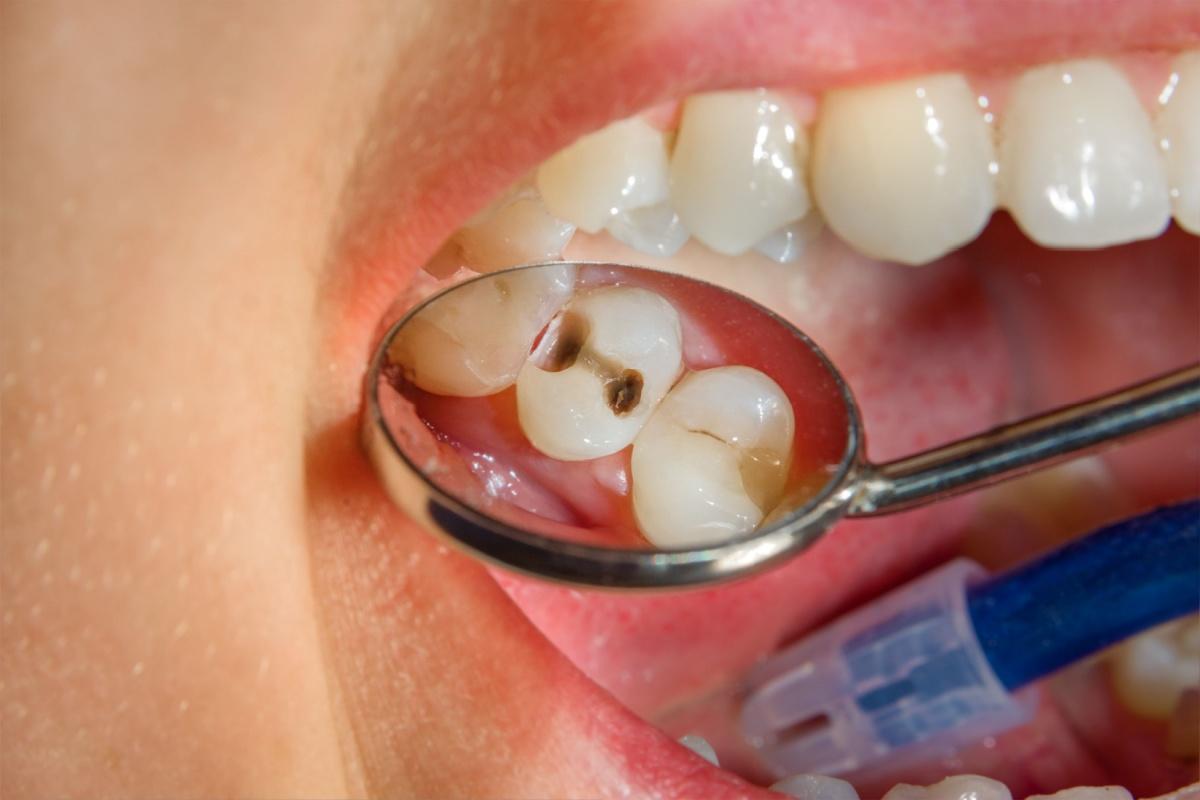
Sometimes, you can spot trouble by looking closely at your teeth in the mirror. Good lighting can help you notice subtle differences in how your smile looks, which may be a good reason to book a dental exam.
Spots & Discolouration
Your teeth might show unusual colour changes as decay begins. Look for these visible signs when you check your smile:
- Chalky white spots, which may indicate early enamel wear.
- Brown or black marks, which may indicate active decay.
It’s important to note that stains and cavities are different. If you notice a small, isolated mark, that may be a cavity. But general tooth discolouration, such as yellow teeth, isn’t always a sign that something is wrong.
Texture Changes
The surface of a healthy tooth feels smooth. But when a tooth decays, bacteria break down the hard tissues and can change how your tooth feels. You might notice these texture differences:
- Uneven rough patches felt with your tongue.
- Visible holes or pits on the flat chewing surfaces.
- Debris frequently catching in the exact same spot.
Temporary Relief for Toothaches
Intense discomfort means the decay has likely reached the deeper, more sensitive layers of your tooth. This pain can be a clear warning sign from your body that you need professional care to prevent the damage from spreading further.
Home methods offer temporary comfort only. They can provide a short break from the ache until you can sit in a dental chair, but they won’t fix the underlying hole in your tooth.
Simple Home Remedies
You can manage the discomfort at home while waiting for an appointment. Try these simple steps for short-term relief:
- Rinse your mouth with warm salt water to soothe irritated gums.
- Keep the affected tooth carefully brushed and free from trapped food.
- Use basic over-the-counter pain relievers to manage any discomfort.
These steps can help you stay comfortable temporarily, but prompt professional care remains important to help maintain your oral health.
When to Visit a Dentist
You deserve to live comfortably, which is why we want you to come in sooner rather than later if you’re experiencing pain. Waiting too long can allow the decay to spread further, causing more discomfort.
Our team at Otara Dental knows that dental anxiety is real, which is why we provide relaxed, comfort-focused repair options for your family. A welcoming environment helps make your visit as enjoyable as possible.
Common Treatment Options
The dental team offers straightforward solutions to get you feeling comfortable again. For example, a simple filling may be recommended and can take between 30 and 60 minutes, depending on the person.
Book Your Visit
Your oral health is closely linked to your overall wellness, so keeping your teeth strong benefits your whole body. Whether you’ve been managing tooth pain or are just looking to get your next cleaning done, Otara Dental can help. Book your next visit today.