
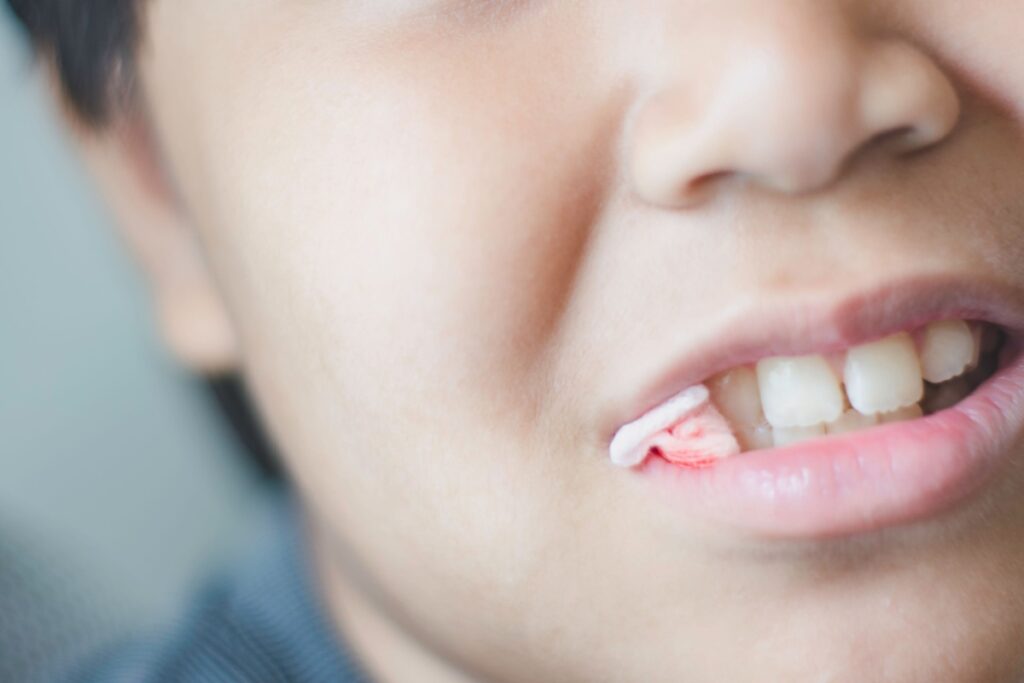
Our team at Otara Dental wants your recovery to be as smooth as possible after a tooth extraction. You’ll leave our office with a mouthful of gauze and a list of instructions, and it’s common to wonder how long to keep biting down on that cotton square.
The goal is to keep the gauze in place just long enough to control bleeding and help a protective blood clot form. You can typically stop using gauze when the bleeding slows to a light ooze or stops completely—usually within 3 to 4 hours after the procedure.
Why Gauze Helps Your Mouth Heal
Apply Gentle Pressure
When you bite down on a gauze pad, you apply gentle, steady pressure to the extraction site. This pressure helps slow and stop the bleeding. It also creates the right environment for a blood clot to form, which is the first step in healing and protecting your overall oral health.
Absorb Extra Saliva & Blood
Gauze soaks up any extra saliva and blood, which keeps the area cleaner. It also gives you a simple way to see how much bleeding is happening. When the gauze comes out with little to no blood on it, you know that your healing process is on track.
How to Use Gauze After a Tooth Pull
Right After Your Appointment
Your dental team will place the first piece of gauze before you even leave the chair. You’ll be asked to bite down firmly—but not too hard—for about 30 to 45 minutes. This initial pressure is important. As your dentist in St. Albert, we’ll also provide clear instructions about aftercare steps.
Change Your Gauze at Home
Once you get home, you’ll need to change the gauze pad regularly. Plan to replace it every 30 to 60 minutes. Before you put a new piece in, you can gently dampen it with clean water so it doesn’t stick. Each time you change the gauze, take a quick look to see if the bleeding has slowed.
Key Signs to Stop or Continue Use
When to Remove the Gauze for Good
You know it’s time to stop using gauze when you see these signs:
- Bleeding has stopped or slowed to a very light ooze.
- The gauze pad comes out mostly clean after 30 minutes.
- This usually happens within a few hours of the extraction.
When You May Need More Time
Sometimes, bleeding can continue a bit longer. If you notice steady bleeding after the first hour, keep using fresh gauze pads and applying pressure. If you experience heavy bleeding that lasts for four hours or more, it’s a good idea to call your dental office for guidance, as you could be experiencing a dental emergency.
The Problem with Too Much Gauze Time
Using gauze for too long can sometimes do more harm than good. A blood clot needs air to form properly, and keeping the gauze in place for too long can:
- Prevent a healthy blood clot from forming over the site.
- Slow down your body’s natural healing timeline.
- Dislodge the clot due to constant friction, leading to a painful complication called a dry socket.
Your Next Steps for a Smooth Recovery
What to Do
Taking care of yourself after the gauze comes out helps your recovery go smoothly. Good post-procedure home care is simple but effective.
- Stick to soft foods like yogurt, smoothies, and lukewarm soup for the first day or two.
- After 24 hours, you can gently rinse your mouth with a warm salt water solution.
- Once the site feels less tender, you can resume your routine of properly brushing and flossing.
- Give yourself plenty of time to rest, especially for the first 24 to 48 hours.
What to Skip
Certain actions can disrupt the delicate healing site. It’s helpful to avoid the following for a couple of days.
- Skip using straws, smoking, or spitting forcefully, as the suction can dislodge the blood clot.
- Avoid hard, crunchy, or sticky foods that could irritate the area.
- Postpone any strenuous exercise or heavy lifting for two to three days.
Taking the right steps after a tooth extraction can help you feel more comfortable and heal more quickly. Knowing when to stop using gauze is a simple but important part of your recovery. If you have any questions about your healing process or need advice, our team at Otara Dental is here to help. Contact our office for personalized support and guidance.